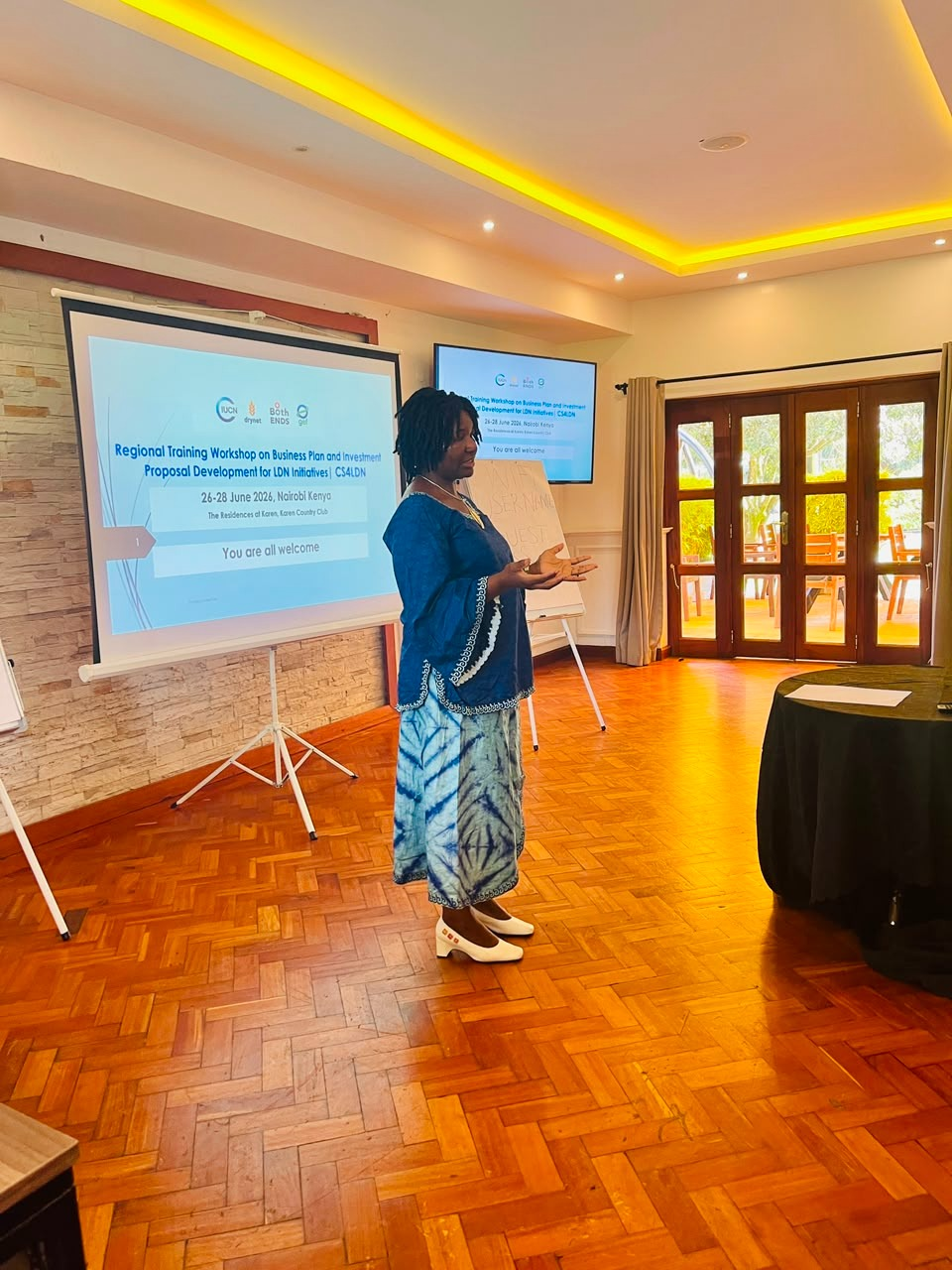
Sixteen representatives of civil society organizations (CSOs) from nine African countries have strengthened their capacity to develop business plans and investment proposals aimed at advancing Land Degradation Neutrality (LDN), following a three-day regional training workshop held in Nairobi, Kenya.
The workshop, convened at Karen Country Club from June 26 to 28, 2026, was organized under the Strengthening Civil Society Role in Achieving Land Degradation Neutrality (CS4LDN) project, a Global Environment Facility (GEF)-funded initiative implemented by the International Union for Conservation of Nature (IUCN), and co-executed with Drynet and Both ENDS.
The training brought together participants from Burkina Faso, Cameroon, Ethiopia, Ghana, Kenya, Mali, Senegal, South Sudan, Tanzania and Zambia, reflecting a shared regional commitment to strengthening civil society leadership in sustainable land management, ecosystem restoration and efforts to combat land degradation.
The primary objective was to equip civil society organizations and other stakeholders with practical skills to prepare credible, financially viable business plans and investment proposals capable of attracting funding for LDN initiatives. The training also aimed to strengthen participants’ ability to identify financing opportunities, engage potential donors and manage financial resources effectively to support sustainable land restoration.
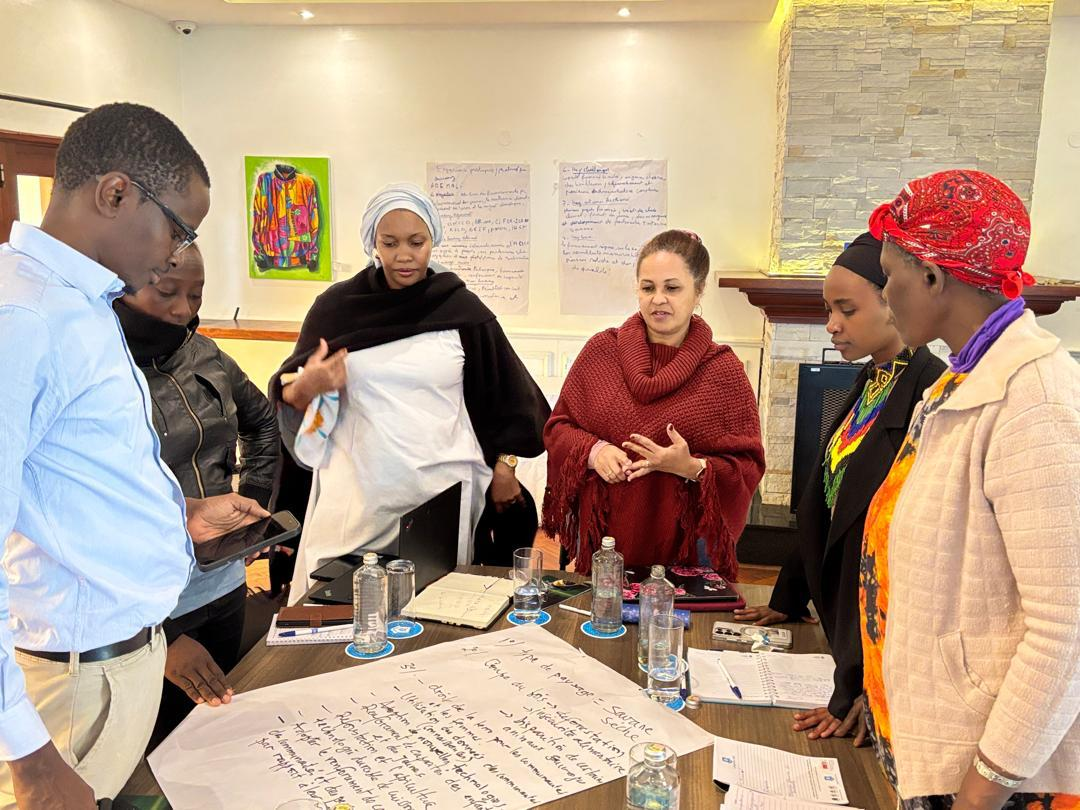
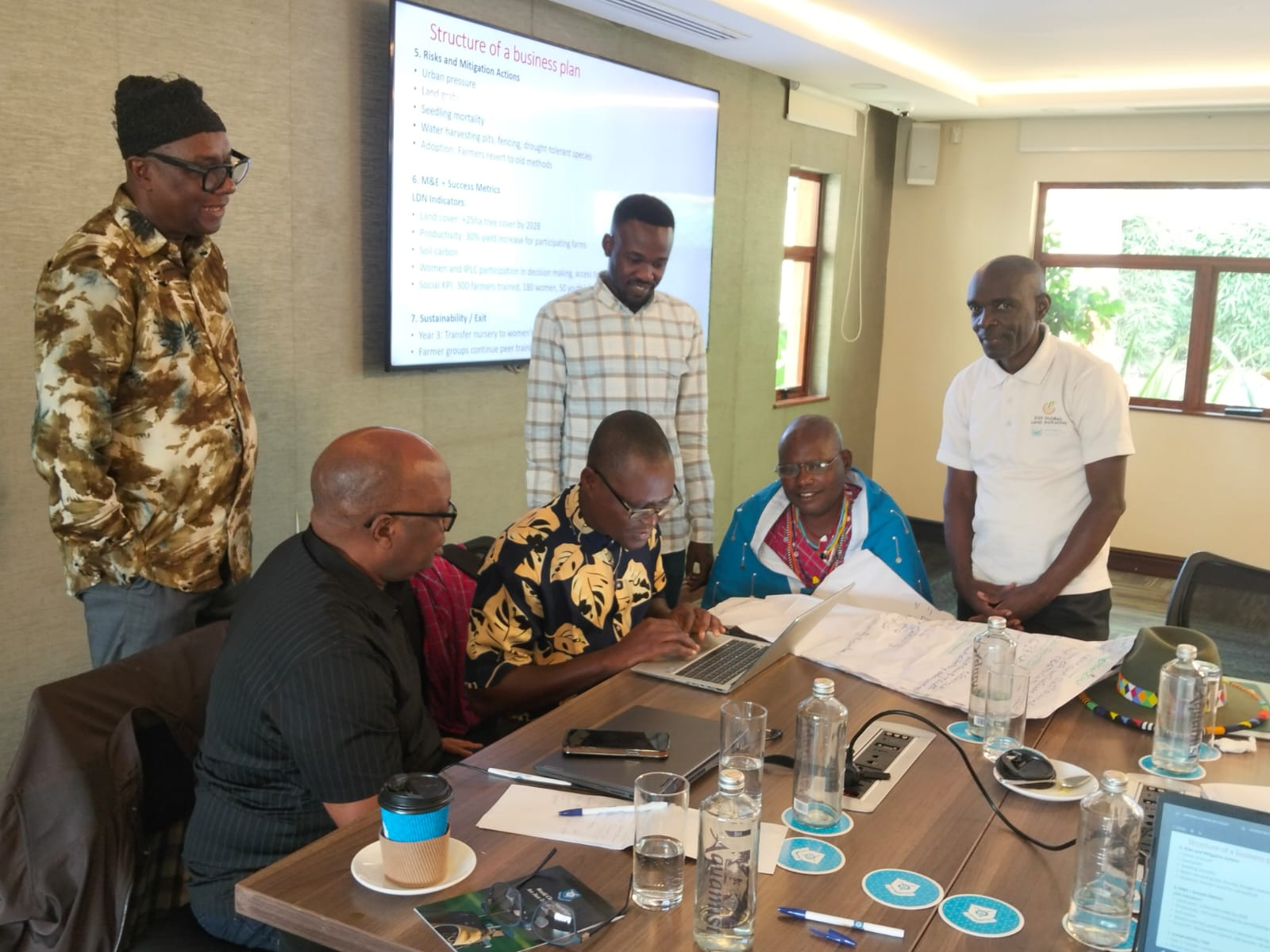
Throughout the three-day workshop, participants took part in intensive, interactive and practical learning sessions focused on the essential elements of business plan development and investment proposal preparation. The sessions enabled participants to exchange experiences, share lessons from their respective countries and explore practical approaches to securing financial support for land restoration initiatives.
The participatory approach encouraged active engagement among trainees, allowing them to learn from one another while strengthening their understanding of how to structure proposals that respond to donor priorities and demonstrate clear, measurable environmental and social benefits.
A key focus of the workshop was addressing the financial barriers that often prevent civil society organizations from implementing promising land restoration and sustainable land management initiatives.
Although CSOs play an important role in working with local communities, Indigenous Peoples and promoting environmental sustainability, limited access to financial resources can constrain their ability to scale up successful interventions.
The training built on the findings of the CS4LDN report, Unlocking Finance for Land Degradation Neutrality, which examines challenges affecting access to LDN financing and proposes more inclusive approaches to strengthening partnerships between donors, and civil society organizations. Here is the full report in Spanish, French and English.
Through discussions and practical exercises, participants explored innovative ways to overcome funding constraints, improve the quality of investment proposals and strengthen collaboration with potential financing partners. The sessions also emphasized the importance of participation, equity, gender responsiveness and ecosystem-based approaches in designing and implementing LDN initiatives.
These principles are essential to ensuring that land restoration efforts deliver lasting benefits, particularly for communities that depend directly on land and natural resources for their livelihoods.
By the end of the workshop, participants had enhanced their capacity to develop and present donor-ready business plans and investment proposals.
They also gained practical knowledge and experience that they could apply in their respective countries to mobilize resources, strengthen project implementation and contribute to national and regional LDN targets.
The workshop further provided a valuable platform for regional networking, knowledge exchange and cooperation among civil society representatives working to address land degradation across Africa. The participating organisations will ensure other organisations not present at the workshop also get the knowledge through mentorships. Each organization will take on at least one mentee and share this knowledge with them over a period of a year. Such collaboration can help organizations identify shared challenges, build strategic partnerships and promote more coordinated approaches to sustainable land management.
The CS4LDN project seeks to strengthen the ability of civil society organizations worldwide to influence and contribute to the implementation of LDN policies and investments. Supported by the United Nations Convention to Combat Desertification (UNCCD) secretariat and the Civil Society Organizations Panel, the initiative works to connect community-level actions with national, regional and international policy and financing processes.
By strengthening the capacity of civil society organizations to develop credible investment proposals and engage effectively with financing partners, the project aims to help unlock resources for inclusive and sustainable land restoration.
The Nairobi workshop marked an important step towards ensuring that African civil society organizations are better equipped not only to advocate for Land Degradation Neutrality, but also to mobilize the financial resources needed to translate their commitments into practical, measurable and lasting results.