By Veronica Mrema, JamhuriMedia
It is not an easy journey for a child born with Sickle Cell Disease in Tanzania. The condition which accompanied by numerous challenges that children have to face repeatedly. Almost every day, they experience severe joint pain, recurrent fevers, yellowing of the eyes, anaemia, hospital admissions and even stigma within society.
Some fail to receive the appropriate treatment because of the high costs involved. Some have dropped out of school for various reasons, while others have been abandoned, particularly by their fathers.
This special report takes an in-depth look at the life journey of a child living with Sickle Cell Disease in Tanzania. What challenges does an individual child face from birth to the age of 18? What challenges do their families also go through, and what efforts are needed to improve their wellbeing?
We begin in Bagamoyo Town, Coast Region, where the writer of this report brings you a special series of interviews. Join us as we follow their stories. “When I was young, I could not explain exactly where I was hurting. I used to fall sick frequently, I was admitted to hospital, and most of the time I cried. My mother told me this.”
Zuleikha Hussein, now 18, tells us about her life with Sickle Cell Disease [SCD]. During her childhood, her hands and feet would also swell frequently, forcing her family to begin searching for what was troubling her. She was taken to Bagamoyo District Hospital, where at the time there was no clinic and the health professionals could not determine what was wrong with her.
Her condition worsened, and she was referred to Muhimbili National Hospital [MNH]. The distance from Bagamoyo to the hospital is approximately 70 – 80 kilometres one way. It takes an average of two to three hours to get there, according to the Safari Tanzania website.
At Muhimbili, she underwent medical examinations and it was discovered that she had been born with SCD. After her condition improved, she was discharged and returned home, and the years passed. “When I became aware of myself, I found that I had already been enrolled in Sickle Cell services,” she says.
She then had to learn how to live with the disease, listen more closely to her body, get used to its challenges and accept living with it. “Sickle Cell pain is not easy to explain. I may feel pain in my stomach, but the pain varies. What I felt yesterday is not the same as today; it can be even more severe.”
Their family has five children. Her younger brother, Habbab Hussein [10], was also born with SCD. “My muscles tighten, I feel pain. I wish to become a soldier,” says Habbab, who also enjoys playing football with his friend Shaban Juma.
THE INFORMATION GAP
Shaban has been told that Habbab has SCD, but says he does not know much about the condition his friend lives with. “His mother [Habbab’s mother] is the one … when I came here, she told me [Habbab] has Sickle Cell Disease. We have not been taught about it at school,” says Shaban.
Mwijahi Hussein is a sibling of Zuleikha and Habbab. Hospital tests showed that he was born as a genetic carrier of SCD. But he also says that he still does not know much about the disease. “I have not been told. A person with Sickle Cell Disease experiences severe pain.
“They also do not know about Sickle Cell Disease at school. They say it is a contagious disease and that it comes from both of your parents,” Mwijahi says, describing what he understands about the condition.
These statements by the children clearly show that there is still an information gap about the disease within the community because SCD is not contagious.
THE FIGURES
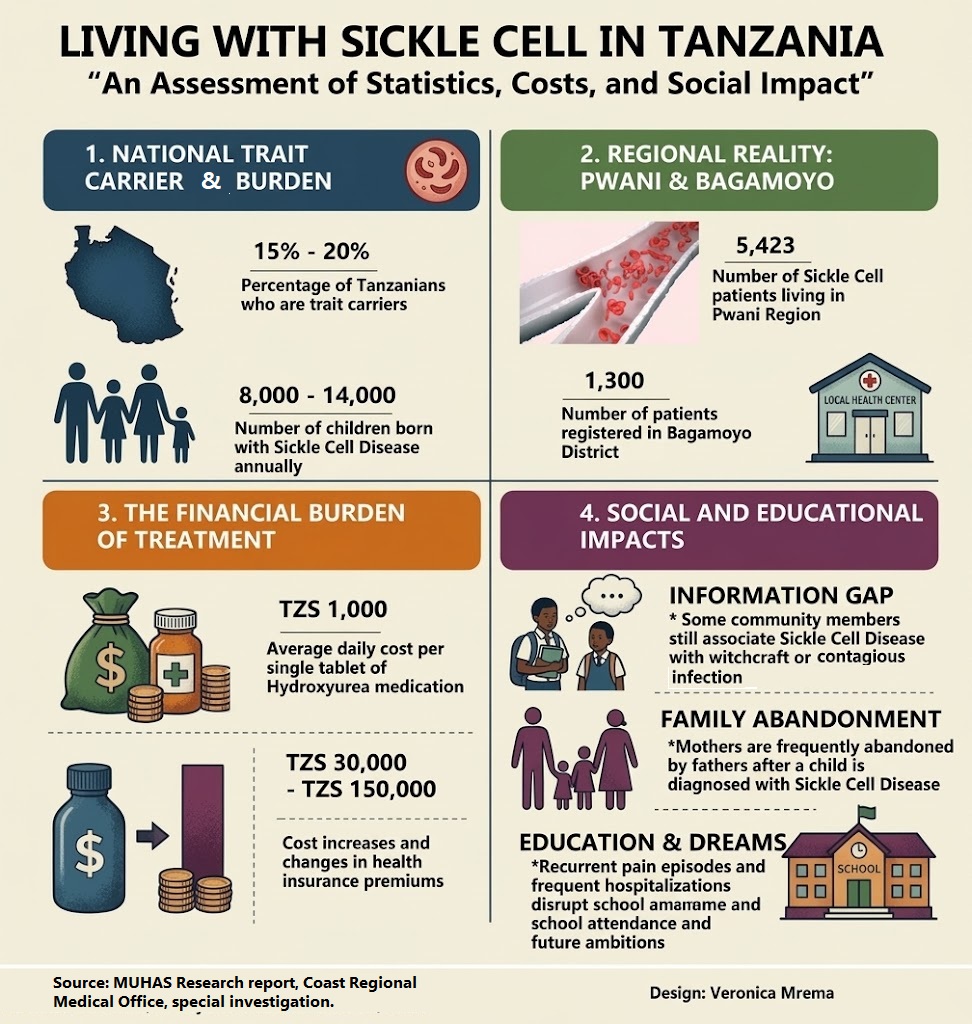
A study by Muhimbili University of Health and Allied Sciences [MUHAS] indicates that 15%–20% of Tanzanians are born as genetic carriers of Sickle Cell trait.
However, many Tanzanians still do not know their status and have not been tested, which remains a challenge. Tanzania is currently experiencing an increase in the number of children born with SCD.
Statistics from Tanzania’s Ministry of Health indicate an increase in the number of children born with SCD, from 8,000 to 11,000 and then to 14,000 each year. Farashuu Mohamed lives with SCD. She now has two children, a three-year-old boy and a two-month-old girl.
Her son was also born with SCD. Her daughter has not yet been tested, and she says the doctor advised that they will conduct the test when she reaches six months of age. Farashuu was diagnosed at the age of seven. She used to fall sick frequently, experience severe joint pain and was admitted to hospital many times before she was diagnosed.
“I started receiving medication and life continued. It was difficult to understand. Sickle Cell pain is difficult; I lost hope of living. Some people used to say that I would not live long.” Despite knowing her status, when Farashuu met a man and told him that she had the disease, he ran away and left her.
When she began a relationship with the father of her first child, she told him about her condition. He did not run away. He promised that they would live together, saying that he did not have the disease.
“He refused to get tested, but when we had a child and the child was found to have SCD, he ran away from me,” Farashuu says. She found another man, but she was afraid to tell him about her condition. Their second child has not shown any symptoms so far, while the first child began showing symptoms at three months.
“He started getting sick. His body, hands and feet were swelling, so I decided to take him to hospital, and they found that it was sickle cell disease,” she recalls.
DIFFICULT TIMES
Ups and downs are part of their lives. Zuleikha says that after completing Standard Seven, she was taken to a place to learn tailoring, but she became ill while she was there.
“I started having diarrhoea and vomiting. I became weak, and I had pain and a problem with my left leg. It could not bend for about a year,” she recalls. The pain continued even after she was given medication. Later, at the hospital, it was discovered that she had a serious problem with her hip, her blood had clotted, and she needed major surgery.
That period was so difficult that she began wondering whether she would be able to continue with her education. “I saw my dreams disappearing,” she says. However, her family encouraged her when she had lost hope.
Although she received treatment, recovered and completed Standard Seven, Zuleikha continues to face emotional pain, particularly when she thinks about the future of her dreams. She had particularly wanted to study medicine or nursing, but her family’s difficult financial situation worsened after their father died four years ago.
Zuleikha’s experience shows how the disease can affect not only health, but also education and a young person’s plans for the future.
THE COST OF TREATMENT
The burden of Sickle Cell Disease is not faced only by the child living with the condition. Families also face challenges, particularly the cost of treatment. Amina Hussein is the mother of Zuleikha and Habbab. “My first child started getting sick when she was two months old. At that time, we did not know what the problem was.
“When the child started swelling, she was taken to hospital and given deworming medicine, but the condition continued. It was after reaching Muhimbili that the problem was identified.”
Since their father died, Amina has been struggling to raise her children while ensuring they attend clinics, receive medication and get proper nutrition. Sometimes, when a doctor prescribes medicines that need to be purchased, she is unable to buy them because she does not have the money.
The hydroxyurea medicine they need costs TZS 1,000 per tablet and the tablet is taken every day. For two children, this is a major challenge for me. There was a day when Farashuu broke down in tears because she did not have money to pay for a laboratory test for her son.
“The hospital wanted me to have the test done. I could not afford it, I cried a lot, then a laboratory worker came and helped by testing him [for free],” she says. From that point, she began thinking about what she could do because her mother was the one who had been paying for her expenses, and on that day she also had no money.
“I thought I had to fight so that I could help my child. I sell food. Sometimes it is enough to meet our needs, sometimes it is not. “You go to the hospital and find that the tests are expensive and you cannot afford them. My capital is small. I sell soup and chapati.
“When I save money when the child is not sick, I can have TZS 90,000 to put aside. When the problems start, you cannot keep that money,” she explains. There was a time when her child became sick and all her business capital was wiped out.
Currently, her son has health insurance through the support of a well-wisher, through the Sickle Cell Disease Patients Community of Tanzania [SCDPCT]. She herself still has no insurance, nor does her second child. Before having this family, she had another business where she sold underwear, kangas and perfume on credit.
“My capital was TZS 350,000. I managed to increase it through sales to TZS 600,000, but when my first child started getting sick, that business collapsed too. Now I have started again.”
Amina and her children’s insurance is the old one, costing TZS 30,000 for a family of six, but starting next year she will have to pay TZS 150,000, according to the Ministry of Health, Tanzania.
“For my life, I have two children with this disease. I do not have an activity that gives me enough income. Life is difficult,” she says.
COAST REGION DATA
Coast Region has 5,423 people living with Sickle Cell Disease, of whom 1,300 are in Bagamoyo District, according to statistics from the Office of the Regional Medical Officer of Coast Region. Within this group are people who are unable to afford treatment because they do not have health insurance at all.
Some are taken to traditional healers instead of hospitals because of limited understanding and misconceptions, with some members of the community believing that they have been bewitched.
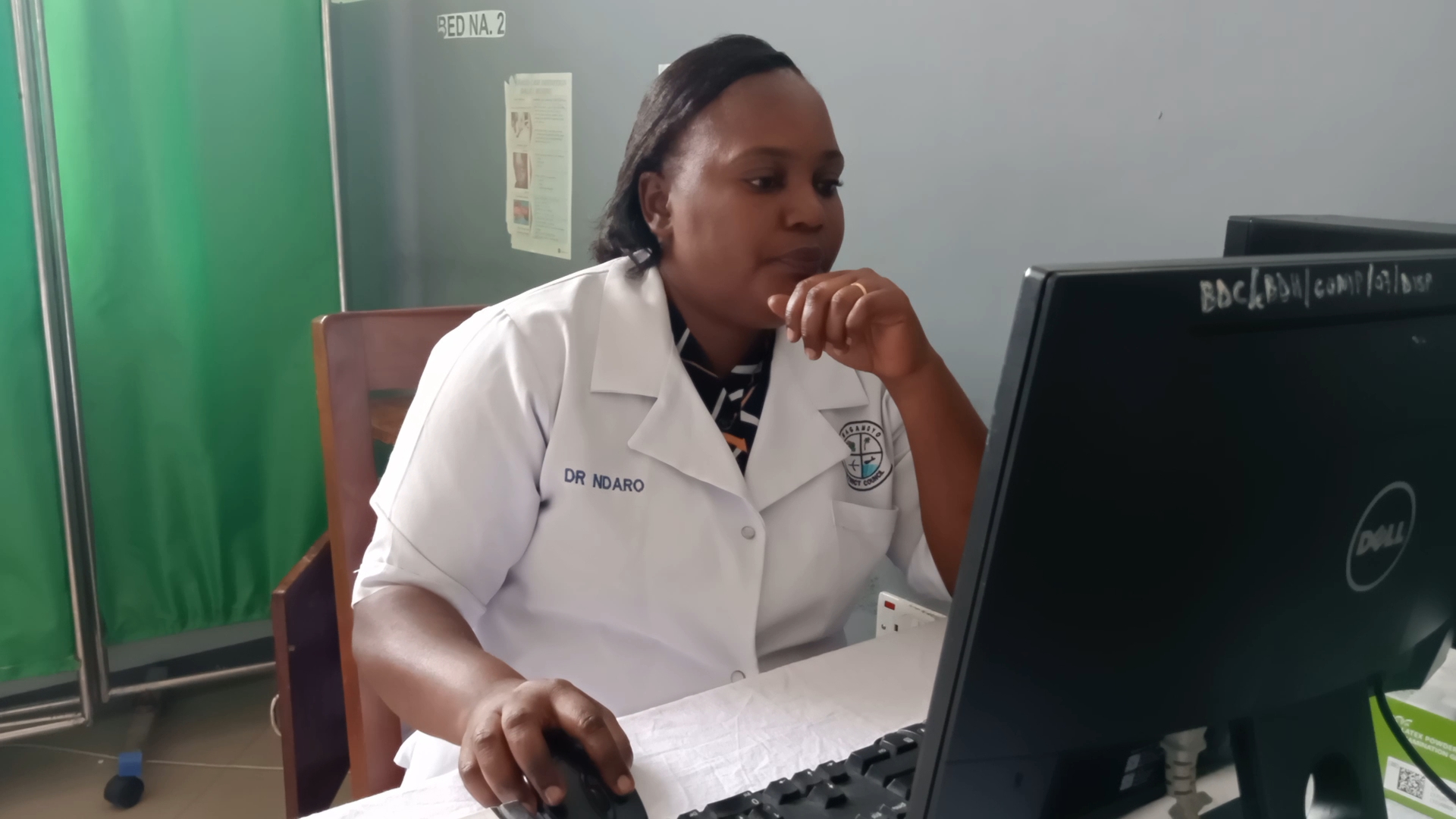
The Sickle Cell Services Coordinator at Bagamoyo District Hospital, Dr Witness Ndaro, says: “The ability of families to afford treatment is a challenge that arises in the provision of daily care.
“Some parents arrive at the hospital with very little money, sometimes only TZS 3,000 to see a doctor. “After the child has been examined, another parent may fail to buy the medicines prescribed.”
According to Ndaro, even a cost of TZS 30,000 is still too high for some families. Ndaro recommends establishing a system to help children with sickle cell disease access essential services at affordable costs or free of charge.
“If possible, they should receive treatment free of charge and all services should be provided free of charge, especially blood count tests and the medicines they are supposed to use. The service of seeing a doctor should also be free. Even nationwide, because a child with sickle cell disease who is in Bagamoyo may tomorrow go to Mwanza, Zanzibar or anywhere else.”
She says early identification would help because a mother may not know what is wrong and may first seek help elsewhere. If we identify the condition early, it can make a difference. But despite the challenges of treatment, costs and the impact of the disease on children’s education and dreams,
one important question remains: How early can a child with sickle cell disease be diagnosed, and what happens when the child is late in receiving the correct diagnosis?
In the second part of this special report, we will continue to explore the life journey of a child born with sickle cell disease. Do not miss the next edition here at JAMHURI MEDIA.