*The pain of growing up with SCD
By Veronica Mrema, JamhuriMedia, Dar es Salaam
A gentle breeze swept around us as we sat outside their home. When I first arrived, he was cheerful. He welcomed me warmly, greeted me respectfully and appeared happy to see me.
But as we sat down to begin talking about the condition he lives with, I suddenly watched his expression change. The happiness disappeared, replaced by deep sadness.
Tears began to well up in his eyes. In a gentle voice, I asked him, “Why are you crying?” He could not answer me. Silence fell between us.
I opened my bag and handed him a tissue to wipe the tears that were running down his cheeks. After some time, I asked him again, “What are you remembering that is making you cry?”
In a low, sorrowful voice, he gave me his answer. “Because I am in pain. My bones hurt, my back,” he said, before falling silent again.
I comforted him and expressed my sympathy before asking, “Does this make it difficult for you to spend time with your friends?”
“Yes,” he replied.
About five minutes later, he told me that we could continue our conversation. He introduced himself as Hafizu Mkalipa.
This is the second part of our special report examining the lives of children born with sickle cell disease, the hardships they face as they grow, and the challenges that shape their childhood.
Their search for answers, encounters with traditional healers, referrals for medical treatment, and the challenge of being treated for other illnesses before receiving the correct diagnosis are among the experiences they and their families have gone through.
These experiences reflect the struggles faced by children living with sickle cell disease as they try to pursue their dreams despite the difficulties surrounding them.
THE TURNING POINT
Here in Mkuranga, Hafizu lives with his parents, his father and mother. He began falling ill repeatedly just a few days after he was born.
He was admitted to hospital while unconscious, and his condition became even more serious when he reached the age of two, a period that proved extremely difficult for his family.
Hamis Mkalipa is his biological father. He says some relatives advised him to take the child to a traditional healer.
“He was showing signs of life in the lower part [of his body, while the area around the back of his neck] was moving [only around the neck], while everywhere else was ‘dead’ [the limbs could not move],” he says.
He adds: “Yes, in the end I believed them … and went [to the traditional healer]. His condition was very bad, and the child’s mother was also with him in the hospital.”
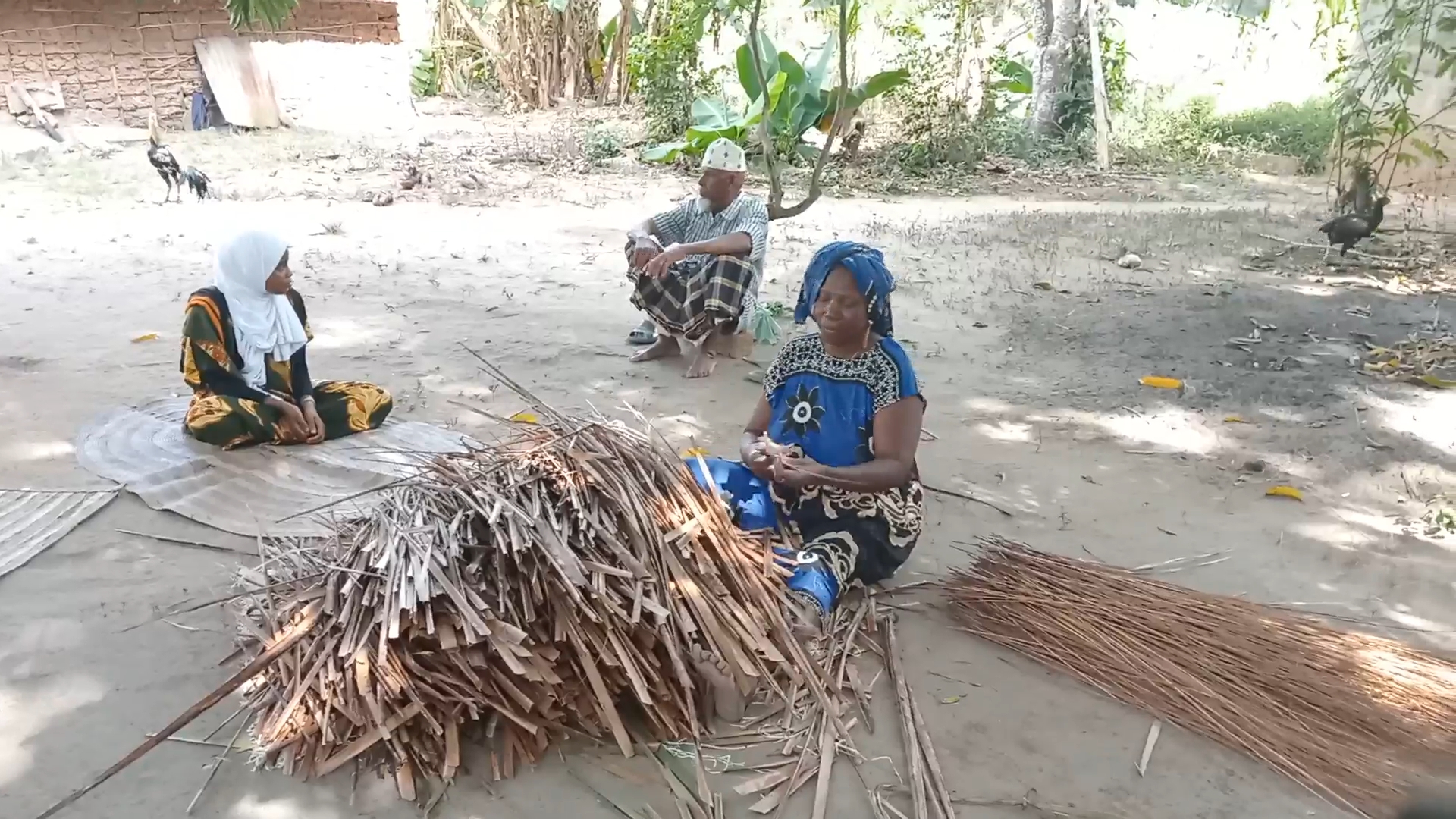
The traditional healer examined his documents and told him that the child’s mother was possessed by a jinn and that it was the jinn sucking the child’s blood.
After ending his conversation with the traditional healer, he received a call from his wife informing him that they had been referred to Muhimbili National Hospital.
“So I asked myself, should I cancel the trip to Muhimbili? Was what this traditional healer had told me really true?”
Eventually, he agreed to take his family to Muhimbili.
“There was a doctor who told me there was one test that had not yet been done. He said it was the final test, and that if it was done and showed nothing, I should take the child back to the traditional healer,” he says.
The samples were taken and sent to the laboratory. Hafizu and his mother remained in hospital while his father returned to Mkuranga to wait for the results.
After 24 hours, the results came back showing that the child had sickle cell disease, and he was started on medication.
“The next day when I went there, I found him in a completely better condition. If I had listened to that traditional healer, I would have already buried my child,” says Hamis.
“I have sickle cell disease,” Hafizu insists.
Saida Khasim is Hafizu’s mother. I asked her whether the traditional healer’s claims had worried her and whether she knew that her husband had considered divorcing her.
She says “If he had divorced me, what would I have done? My child was the one who was sick, and I had already been given [the responsibility], so I would have accepted it.
“He would have left me with my children. They are sick, so who would remain with them? There are people in hospitals who complain, asking where a child got the illness from, and then the mothers are abandoned. It is not a good thing.”
ANOTHER FAMILY
The challenge faced by the Mkalipa family not knowing early enough what was wrong with their child was also experienced by the family of Omary Jabir and his daughter, Rehema Omary.
“When I realized that I had sickle cell disease, I understood that it was just a lack of blood that was troubling me,” Rehema says.
She is a Form One student at a secondary school here in Mkuranga, Pwani Region.
“I live with sickle cell disease. There are times when it causes me pain, and then I miss school.
“So I follow what my doctor has told me. I do not go to school until I take my medication, because if I do not take it, it will cost me my health. I have a big dream of becoming a doctor and treating different patients.”
Mr. Jabir says the problems began when Rehema was still a child.
“She would lose blood and be taken to hospital; she would lose blood and be taken to hospital,” he says.
“Until one doctor named Matitu told me, ‘Mzee Mpemba, take that child to a bigger hospital so that she can undergo more advanced tests.’ I took her to Mwananyamala Hospital.”
She was diagnosed with sickle cell disease.
“She was admitted there from the first day until the seventh day and then discharged. When she was discharged, her mother was given about 100 tablets. When they ran out, she had to buy more.
“She was supposed to take one every day. We have continued doing that until today.
“Her current challenges are frequent fevers and headaches.
“The doctors have told me to continue with the medication. Until today, I have not given up. She takes her medication as usual,” he says.
Rehema is now 14 years old. Mr. Jabir says some men have abandoned their families when a child is diagnosed with sickle cell disease, but he did not.
“Because she is my child. When she has problems, I take responsibility. I have made every effort to care for her up to today.”
FEAR OF DEATH
Husna Lugombe is a grandmother whom I estimate to be more than 80 years old. She lives with her granddaughter, Salma Kawambwa, who lives with sickle cell disease.
“When I was told that I had this disease, it was difficult to accept, but I accepted it. I saw it as something normal, a disease like any other. Perhaps God gave it to me for a reason,” Salma says.
She says she went through a difficult period growing up because she was frequently admitted to hospital for treatment and blood transfusions.
Husna remembers how she struggled with her granddaughter before the condition was identified.
“She was diagnosed when she was three years old. I struggled, going from one place to another, and they would tell me it was pneumonia, asthma, until the day she was diagnosed. That was when I stayed in the hospital while everyone else left, and I was told not to leave.
“I was very shocked. What was wrong with the child? I was given a piece of paper and told to go home. The doctor asked me what was wrong with my granddaughter, and I said pneumonia,” she recalls.
She adds “He said, ‘It is not pneumonia. It is sickle cell disease.’ I continued with treatment at Mkwalia Hospital until she improved.”
Husna says she spent so much time admitted in the children’s ward with her granddaughter that she was given the nickname “Chairperson of the Children’s Ward.”
She says she raised her granddaughter through years of struggle, but became particularly worried when she reached puberty and later became pregnant.
“The disease seemed to return with greater force [crisis]. She gave birth at Muhimbili and came back safely with the baby.”
She adds “I used to have doubts. They said that when she reached puberty, the disease would go away. I kept praying to God until she passed through all those years, and I was still with her as usual.
“Then when she became pregnant, that thought came back. When she reached puberty, I had doubts and thought perhaps she would overcome it, even with the pregnancy. I would have doubts and then dismiss them, saying God is there.
“He really is. He blessed me with her and the child. I have been very happy up to this moment.”
Salma adds “It put me through a difficult time, but I dealt with everything. Pregnancy and sickle cell disease were difficult for me.
“I was sick all the time, admitted to hospital, constantly unwell, admitted, given blood, fluids and experiencing pain.”
THE BURDEN OF COST
Mr. Jabir says raising and caring for a child living with sickle cell disease can be expensive when a parent or caregiver cannot afford health insurance.
I asked him whether he remembered how much he had spent so far. “I cannot tell you how much money it has cost me. It is a lot.
“She does not have health insurance. The tablets she takes cost 1,000 shillings each; one month’s dose costs 30,000 shillings. She also needed to be admitted many times and receive blood transfusions.”
Hafizu also experienced a similar situation in the early stages of his illness, when he required frequent blood transfusions.
“When he is given blood today, by tomorrow it is gone and they give him another transfusion. He is given medication today, and by tomorrow his condition becomes worse,” says Hamis, his father.
He adds “Until today he is doing well, but now he is stunted. Even when you look at him, he is 14 years old but he has remained small.”
“I took a very long time, about two years, before I discovered what was wrong. He gave me a lot of trouble. There is a tablet we were told to give him every day, one tablet costing 1,000 shillings. Now I have two children, so that is 2,000 shillings every day. Where do you get that kind of money? Isn’t that a challenge?”
His second child, who is two years old, has also been diagnosed with sickle cell disease.
“When this second child was born, I told them, ‘Let us have him checked properly.’ He does not show signs of stunted growth. We discovered it early,” he says.
Hafizu dreams of becoming either a doctor or a teacher. “A doctor, so that I can treat patients, or a teacher, so that I can educate the community and other teachers, encouraging them not to punish children with sickle cell disease harshly.”
A MAJOR BARRIER
Tanzania is estimated to have about 14,000 children born with sickle cell disease every year, placing the country among those with a high burden of the disease in Africa and globally.
Globally, approximately 300,000 children are born with sickle cell disease every year, with nearly 75 percent of them born in Africa.
Limited understanding of sickle cell disease remains a challenge for many communities in Tanzania, contributing to stigma and misconceptions.
Pwani Regional Coordinator for Non-Communicable Diseases, Dr. Eligreater Mzava, says limited public understanding of sickle cell disease remains a major challenge.
“Some people do not know their status, while others delay taking children with symptoms to hospital because of misconceptions.”
According to data from the Office of the Regional Medical Officer in Pwani, the region has a total of 5,423 people living with sickle cell disease.
“Many people think it is caused by witchcraft, and they delay going to hospital for treatment. But it is not caused by witchcraft; it is a genetic condition,” says Dr. Mzava.
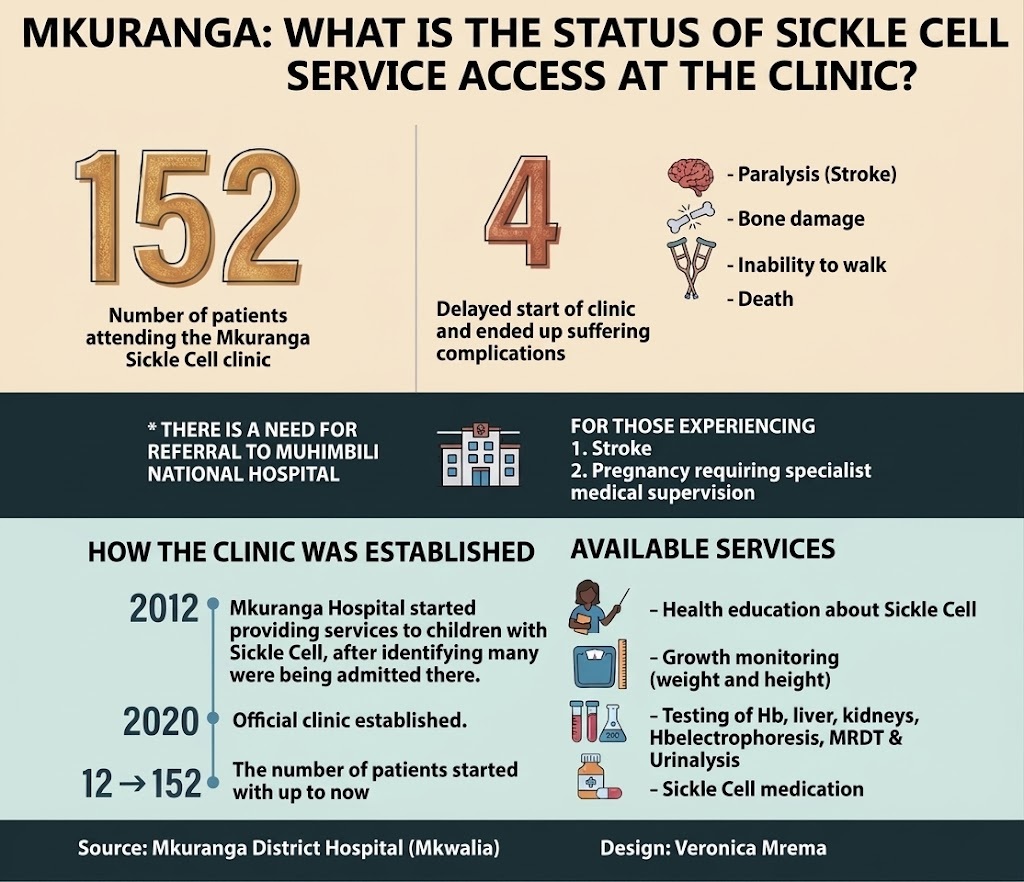
He says the government, working together with development partners, is making efforts to strengthen early screening and diagnostic services for sickle cell disease in the region, where Mkuranga is one of the districts.
Sauda Mwishehe is a caregiver to Sauda. She says there are still people in the community who lack adequate understanding of the disease.
“Everyone has their own beliefs. Some say it is not sickle cell disease, that the child has been bewitched. I thank God for this one because I found out what was wrong, and I also have a child of my younger sibling who has sickle cell disease.
“Since the child was tested and the problem was identified, we have followed hospital treatment. But some people still do not believe it.”
She calls on the government to continue ensuring that medicines are available so that people living with sickle cell disease can continue receiving treatment.
“I go with her to the clinic, and we were already told to get health insurance. Her biological mother was also told to look for insurance.
“I urge girls and women who know they have this condition to take their medication. Mothers and fathers should not ignore it. If they see a child losing blood and say, ‘That is witchcraft,’ and then the child is given medication, they can lose that child,” she advises.