By Veronica Mrema, JamhuriMedia, Dar es Salaam
For a child born with Sickle Cell Disease, the journey of life can begin without the child or their family knowing that they have a condition that requires close monitoring and care.
A child may grow up experiencing recurring severe pain, frequent fevers, weakness, or other symptoms, while the family searches for answers from traditional healers or moves from one health facility to another.
Some of the children we met during the reporting journey for this special report described how they began falling ill when they were very young.
Some were admitted to hospital several times before their families discovered that Sickle Cell Disease was the source of their problems.
But children living with Sickle Cell Disease were not the only ones who provided a “picture” of the gap that exists within society regarding a disease that is inherited through genes carried by both the father and mother.
In our conversations, in the previous articles, children who do not have the disease admitted that they still do not have enough knowledge about Sickle Cell Disease, what it means, and how it affects their peers who live with it.
This shows that behind the challenge of a child who needs care is another challenge within society — the need to understand the disease.
But before severe pain becomes part of a child’s life, before hospital admissions or interrupted schooling, there is one step that can change the course of that child’s journey.
That step is early diagnosis.
But at what point should a child born with Sickle Cell Disease actually be diagnosed? This is a fundamental and important question to ask.
Another important question is: if the disease can be detected early, why are there still children who reach specialist care only after they have already suffered complications?
Dear reader, this is the third part of this report, in which we have gathered important information through special, in-depth and close-up interviews.
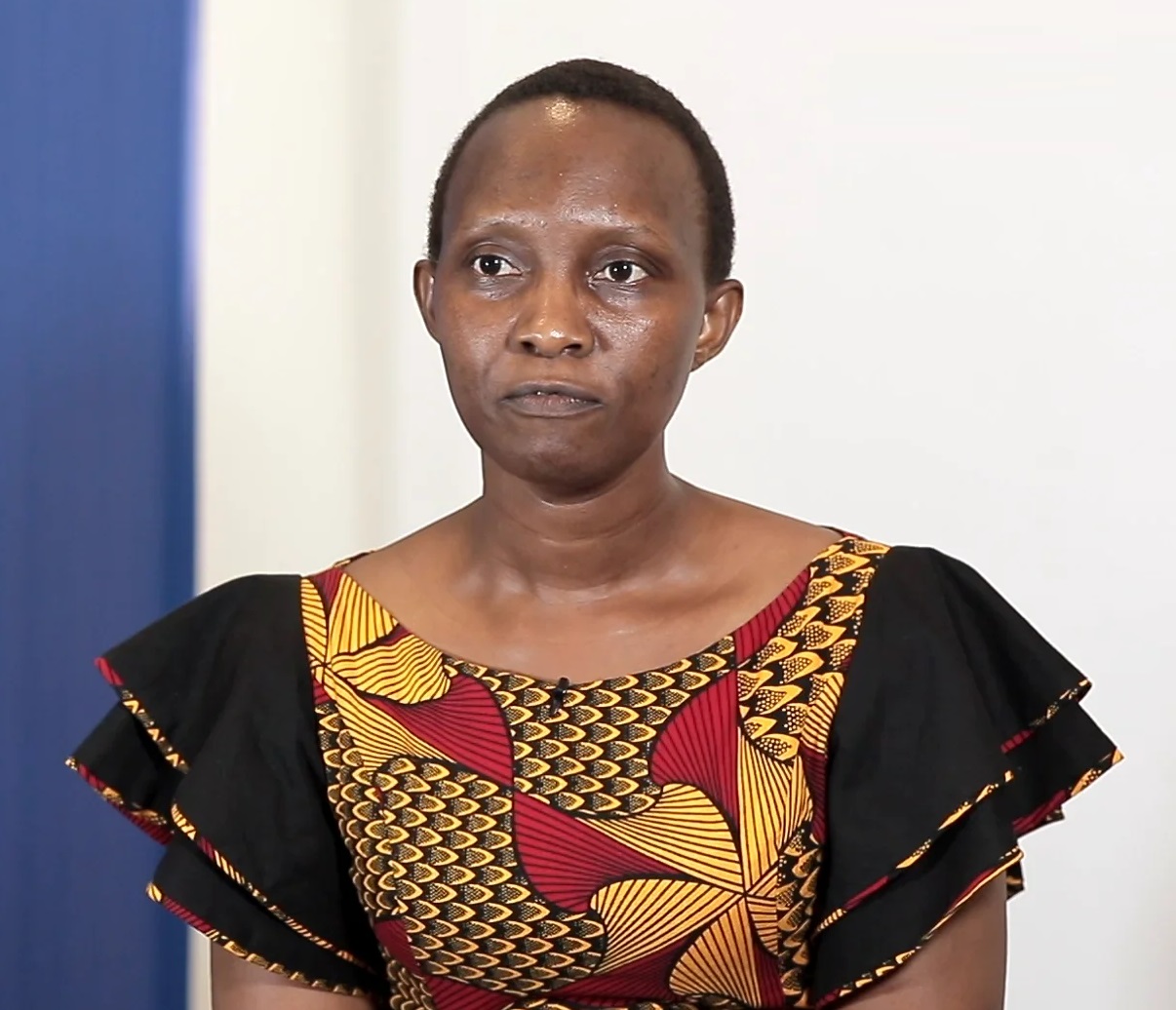
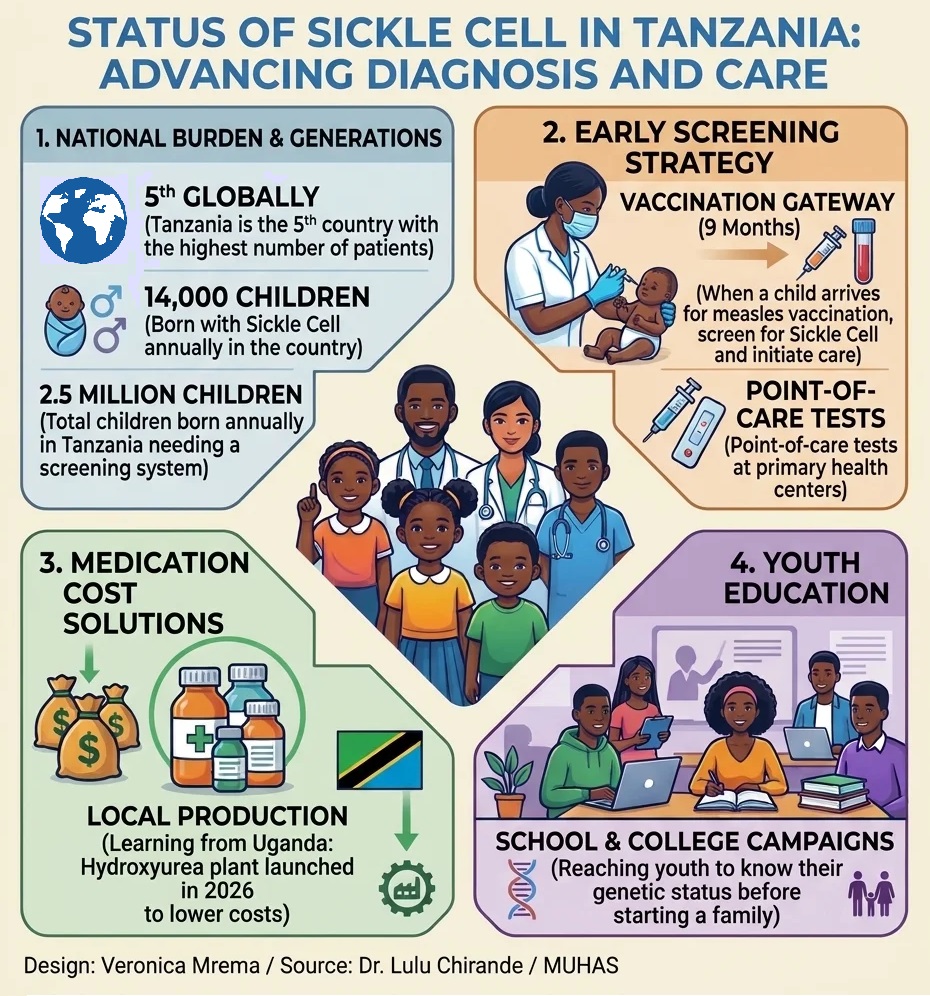
“It is true that Tanzania is the fifth country in the world with the highest number of people living with Sickle Cell Disease, and approximately 14,000 children are born with the disease every year.”
This is according to Dr. Lulu Chilande, a Paediatrician and Specialist in Paediatric Haematology and Oncology, as well as a lecturer at Muhimbili University of Health and Allied Sciences (MUHAS).
In this special interview, Dr. Lulu further explains:
“But the number of children born with the disease may be even higher because these figures do not cover the entire country. They come from only some areas.
“Additionally, there is a large proportion of people, between 15% and 20%, who carry Sickle Cell genes and still do not know their status. This increases the possibility of continuing to have more children born with Sickle Cell Disease in Tanzania.”
“The disease does not occur at the same level, in terms of the number of people affected, in all parts of the country. However, in some areas where specialists have reached, they have continued to encounter patients as well as adults who carry these genes,” says Dr. Lulu.
WHERE THE GAP LIES
The problem, according to Dr. Lulu, is that for a long time testing was not easily accessible. As a result, many people who carried the genes did not know their status.
“Because they do not become sick, they live normal lives, but they can have children with Sickle Cell Disease,” she says.
She adds:
“Therefore, the level of diagnosis is still low despite increased awareness and efforts to help people understand their genetic status.”
Because of this gap, Tanzania took steps and made changes that have begun to improve the country’s capacity to diagnose Sickle Cell Disease.
“It is the development of testing. In the past, testing was difficult and a person had to go to a major hospital to be tested,” she says, adding:
“Now there are rapid tests, known as point-of-care tests, which have made testing easier and increased the ability to reach more people.
“These tests can be carried and used in different areas after healthcare providers have received training.”
With these changes, a trained healthcare worker can now learn how to use the test within a short period of time.
Dr. Lulu compares the simplicity of the test to malaria testing, saying it can even be used at the lowest level of healthcare services.
This means that a child does not necessarily have to wait until they are taken to a major hospital before Sickle Cell Disease is investigated.
According to Dr. Lulu, the disease can be managed from the first level of care.
“Children are the most affected,” she says, explaining that an adult living with Sickle Cell Disease has already passed through childhood because the disease is inherited.
Therefore, she says, the goal is to identify children early and begin treatment before they develop serious complications requiring specialist care.
A doctor, nurse and laboratory specialist can provide services after receiving the necessary training.
Even hydroxyurea, which previously had to be prescribed by a specialist, can now be provided by a doctor at the primary level after the Ministry of Health has satisfied itself about its safety.
VACCINATION CAN PROVIDE AN ENTRY POINT FOR IDENTIFYING CHILDREN
Dr. Chilande sees Tanzania’s childhood vaccination system as one of the major opportunities that can be used to diagnose Sickle Cell Disease.
She says that more than 90% of children in Tanzania receive vaccinations at the primary level.
Therefore, a child who arrives at a health facility for vaccination can also be tested for Sickle Cell Disease.
The child can have their weight measured, receive folic acid and Pen V, and at a later stage begin hydroxyurea depending on the care they require.
According to her, when a child returns at nine months for the first measles vaccination, hydroxyurea can also be initiated.
Therefore, the vaccination system, which already reaches a large number of children, can become an important system for reaching and testing children for Sickle Cell Disease.
“If we do this, children are tested early and started on treatment early, including receiving folic acid and Pen V, and if they are given hydroxyurea, very few children will need specialist care,” she says.
But the current situation, she says, is different.
MANY CHILDREN ARRIVE AFTER COMPLICATIONS HAVE DEVELOPED
Dr. Chilande says many children who require specialist care reach that stage because they were tested late and did not receive treatment early.
Some, she says, have already developed complications such as stroke, kidney failure and other problems.
This is where the stories of the children we met in the earlier parts of this report converge with the specialist’s explanation.
The long journey of searching for answers, receiving initial treatment and discovering the problem late does not affect only one child.
It is a challenge that can change if diagnosis and care are brought closer to the child.
“So the key message is that Sickle Cell Disease is not only a specialist disease. It is a disease that can be managed at the primary level, and services should be taken closer to the community,” says Dr. Lulu.
She says that previously, the system required patients to come to referral levels, but many were unable to reach them and therefore did not receive treatment.
Later, she says, it became clear that greater effectiveness could be achieved by taking primary healthcare services to the areas where communities live.
This is why she emphasizes the importance of primary healthcare facilities handling testing, education and essential medicines.
CHWs: THE LINK BETWEEN THE CHILD AND HEALTHCARE SERVICES
In the search for ways to bring services closer to communities, Dr. Chilande says Community Health Workers (CHWs) are an important link.
She says these workers already operate within communities, following up on various services, including vaccination, HIV, tuberculosis and maternal health.
Therefore, if they are trained on Sickle Cell Disease, they can add this information to the services they provide within communities.
“They are already in the community,” she says, emphasizing:
“Their role could be important in ensuring that information and Sickle Cell Disease services reach people who live far from health facilities.”
THE CHALLENGE OF DISTANCE IS SIGNIFICANT
Dr. Lulu says it is not possible to expect communities to travel for four hours in search of healthcare services.
“The solution is to bring services closer to them.”
From her perspective, if this system can reach a large proportion of children, the burden on referral services could decrease, leaving only children who require higher-level care.
She suggests that if the system works for 90%, the remaining 10% could be children who continue to require referral services.
However, she says implementation requires adequate resources.
TESTING ALONE IS NOT ENOUGH
Dr. Lulu says Tanzania has learned a great deal about Sickle Cell Disease through research.
“We have conducted research and discovered what needs to be done,” she says.
Therefore, the major problem now is not a complete lack of knowledge about how to address the disease.
The challenge is obtaining adequate resources, including testing and medicines.
She says research has shown what needs to be done, but there has been another challenge: children were tested and diagnosed with Sickle Cell Disease, yet many did not continue coming to clinics to receive treatment.
Therefore, testing efforts lose their meaning if a child who has been diagnosed does not enter care.
“The goal is for those with Sickle Cell Disease to come and receive treatment,” she says.
This is where Dr. Lulu emphasizes the importance of linking diagnosis with care.
Once a child is tested, they should receive care.
Once care is provided, the challenges that emerge should be investigated.
And those challenges should be given answers.
RESEARCH AND HEALTHCARE SERVICES MUST GO TOGETHER
Dr. Lulu says research cannot reach a point where it can say that everything is finished.
Research can show a solution, but when that solution begins to be implemented, new questions emerge.
That is why she recommends that researchers and the country continue with implementation science research — conducting research while services are being delivered.
“For example, when more children begin using hydroxyurea, specialists should continue collecting information about the challenges they encounter.”
How is the medicine being used?
How is it stored at home?
What challenges are families facing?
And do what is written in textbooks correspond with the actual environments in which Tanzanians live?
Questions like these, Dr. Lulu says, should continue to be investigated while services are being provided.
Even the rapid point-of-care tests currently available, she says, emerged from the need to find better approaches after laboratory testing did not achieve the expected effectiveness.
Therefore, research should not be a reason to wait before providing services.
Services and research should move together so that care continues to improve.
EDUCATION AND TESTING
Beyond identifying children born with Sickle Cell Disease, Dr. Lulu sees the importance of reaching young people.
Through initiatives known as “Vunja Mduara”, young people in schools and colleges are educated about Sickle Cell Disease and encouraged to know their genetic status.
The goal is to provide them with accurate information that will enable them to make informed decisions about their status when they begin relationships and plan families.
She says a person can carry the Sickle Cell gene without becoming sick and continue living a normal life.
But if two people both carry the genes, there is a possibility of having a child with the disease.
Therefore, she says, education and testing can help people know their status and make informed decisions.
This is the idea behind “Vunja Mduara”: to continue educating and testing people so that they know their genetic status and, over time, help reduce the number of children born with Sickle Cell Disease.
EVERY CHILD BORN SHOULD BE TESTED
Dr. Lulu says the priority now should be healthcare services.
“We are not conducting research simply to test for Sickle Cell Disease. Now, every child born should be tested for Sickle Cell Disease,” she says.
Because not every child was tested in the past, she says there are still many children aged two years and above who were never tested.
Therefore, children under the age of five should be tested.
In the coming years, she says, the goal is for children to be tested from birth.
She says even university students should be tested so that society can continue reducing the number of children born with Sickle Cell Disease.
But implementing this requires resources.
Tanzania has approximately 2.5 million births every year, according to her explanation.
If every child needs to be tested, the country needs sufficient testing kits, trained healthcare providers, medicines, education, funding and time.
“All of these require resources, money and time. We are working to find all these things,” she says.
IT IS A BEGINNING, NOT THE END
Early diagnosis is a fundamental step.
For the children we spoke to during this journey, Sickle Cell Disease has not been limited to the name of a disease.
It has entered their school lives, their pain, their families, the cost of treatment and their dreams.
And for children who do not have the disease but lack adequate knowledge about Sickle Cell Disease, this gap shows that a child living with the disease cannot be helped through testing and medicine alone.
They need a society that understands them.
They need healthcare that is available close to them.
They need to be diagnosed early.
Once diagnosed, they need to enter treatment.
Dr. Lulu says Tanzania already knows what needs to be done.
The disease exists, treatment exists, and a person living with Sickle Cell Disease can live well, contribute to society and the nation, and achieve their dreams, including becoming a doctor or a lawyer.
But for that to happen, services must reach the child early.
Therefore, after the first two parts of this report showed the lives and challenges of children living with Sickle Cell Disease, this third part takes the discussion to another important stage: not only how a child lives with Sickle Cell Disease, but when they are diagnosed and how they begin to receive help.
Because a child born with Sickle Cell Disease should not have to wait until the pain becomes severe before the system identifies them.
And if we know what needs to be done, the next question is one.
Are we doing enough to ensure that what we know reaches every child born with Sickle Cell Disease?
The question of the cost of medicines, particularly hydroxyurea, also enters this discussion.
For families raising children living with Sickle Cell Disease, treatment is not simply about going to hospital when a child becomes sick.
It is part of everyday life.
Dr. Lulu Chilande says research can help provide evidence that enables policymakers to make decisions about healthcare services and medicines, although research itself cannot directly lower the price of medicines.
She gives the example of hydroxyurea, a medicine that began to be used through research and was later incorporated into the healthcare system, and is also included on Tanzania’s essential medicines list.
From her perspective, research can also help identify more affordable ways of accessing or producing the medicine.
She gives the example of Uganda, where there is a factory producing hydroxyurea, and says Tanzania could learn from that example or collaborate with Uganda in finding ways to reduce the cost of the medicine.
“Uganda has a factory. Perhaps we can collaborate with them and have a factory here in Tanzania where we manufacture hydroxyurea, making the price more affordable,” she explains.
This example shows that the Sickle Cell Disease discussion does not end with testing a child or taking them to hospital.
After a child has been diagnosed and treatment has been provided, the next question is whether the family can afford it and whether the medicine will be consistently available.
In Uganda, Quality Chemical Industries Limited launched a hydroxyurea manufacturing plant in 2026 and began producing the medicine.
The move, which the company and health authorities in the country have described as aiming to increase availability and reduce dependence on medicines imported from abroad, represents another approach to addressing access.
For Tanzania, Dr. Lulu’s argument does not mean that local production has already been established or that prices will automatically fall.
Instead, it points to an area where research, policy, pharmaceutical production and investment could come together in seeking a solution to a challenge that families of children living with Sickle Cell Disease have been facing.
That is why, from her perspective, the next step is not simply to continue conducting research on how to test for Sickle Cell Disease.
Rather, it is to use what is already known to improve services while research continues to seek answers to the challenges that emerge as those services are delivered.