By Veronica Mrema, JamhuriMedia, Dar es Salaam
At the age of eight months, she was diagnosed with Sickle Cell Disease, and she has now lived with it for 39 years. Those years have carried experiences that cannot be captured by a blood test alone.
It is the life of someone who grew up experiencing the disease firsthand, before that experience later became part of her advocacy efforts against Sickle Cell Disease in Tanzania.
It has now been 18 years since she began that work. Arafa Said still looks at the child born today with Sickle Cell Disease with a ‘third eye’, while there is also a large group of people who do not know their status.
Will that child have to grow up facing the same barriers, such as stigma, the cost of treatment and other challenges, simply because they are living with Sickle Cell Disease?
Can Tanzania establish a better system in which a child with Sickle Cell Disease receives quality and appropriate care without any barriers, including financial constraints or the distance they have to travel to access services?
Arafa is the Executive Director of the Sickle Cell Patients Community of Tanzania (SCDPCT).
She says she wants to see a child born with Sickle Cell Disease receive quality care and live well enough to pursue their dreams.
This year alone, SCDPCT, in collaboration with other stakeholders, has secured health insurance coverage for more than 30 children.
That number is not a solution to the entire challenge, but for Arafa, it demonstrates one thing: a child living with Sickle Cell Disease cannot be given a chance to live well simply by identifying that they have the disease.
They must also be able to afford the care they need after being diagnosed. “The child should not suffer or fail to access care because they do not have money,” she says.
“For a low-income family, the cost does not begin at the hospital. There is the transport fare to get to the facility, the cost of tests.
“Hospitalisation when necessary, and other needs that may arise in the life of a child who requires regular care.
“For families whose income is low or limited, the cost of transport, tests and hospitalisation is a burden,” Arafa says.
That is why SCDPCT wants services to be brought closer to people, while also calling for the insurance system to take into special consideration the needs of people living with Sickle Cell Disease.
“You know they need it frequently; if it is expensive, it becomes a bit of a challenge,” she says. For a child, that challenge can have consequences that go far beyond the day they miss care.
They may miss school, a family may spend its income on treatment instead of other needs, or a parent may fail to afford the costs required to ensure the child continues receiving care.
In earlier parts of this journey, children and their families have described how Sickle Cell Disease affects their lives.
Now the question shifts to another side: how much of these costs should be borne by families, and how much should be the responsibility of the health system and society?
For Arafa, a child should not be left behind simply because they were born into a low-income family. That is why she also emphasises the importance of early diagnosis for all children.
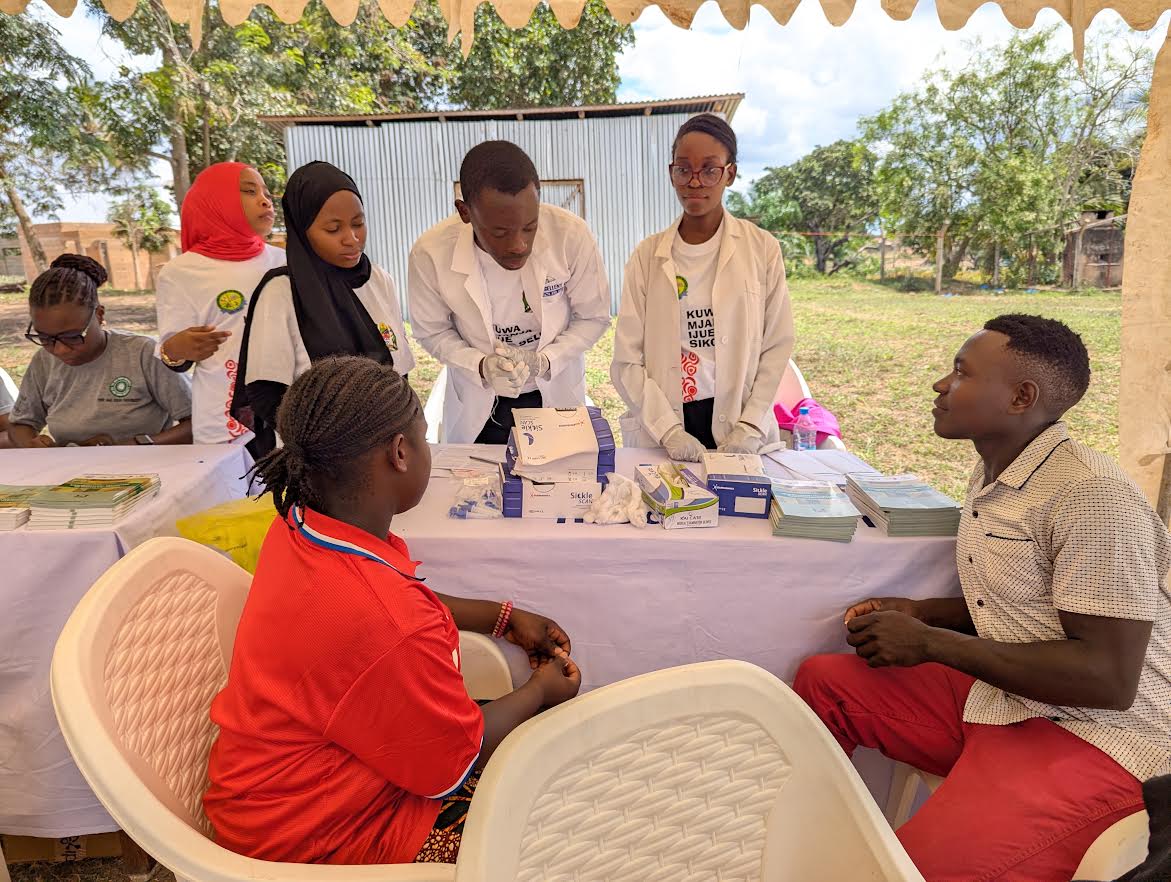
“My general advice, starting with the Government, is that the time has come to ensure that every child born in Tanzania is tested for Sickle Cell Disease and begins treatment,” she says.
The Ministry of Health’s Sickle Cell Coordinator, Dr Asteria Mpoto, says the Government is also looking at the issue from the broader perspective of access to services and health insurance.
She says that following the launch of Universal Health Insurance, the Government believes every Tanzanian who needs healthcare will be able to access services equitably.
Many blood tests have been included in the insurance package. However, Sickle Cell Disease services do not all fall within the same cost category.
Dr Mpoto cites bone marrow transplantation as an example of a service that remains expensive because it is a new service in the country and requires highly specialised expertise.
She says KCMC is now also at the stage of establishing the service, while explaining that other centres such as Bugando and Muhimbili may expand the service as capacity increases.
In her view, expanding services could also help reduce costs.
She gives the example of hydroxyurea, which she says was previously expensive but is now available at health facilities and its cost has decreased to some extent.
However, for a family raising a child with Sickle Cell Disease, cost is not the only issue. There is also the issue of public understanding.
Dr Mpoto says the Government has begun focusing on influential groups in society, including young people, religious leaders, journalists and teachers.
For young people, the aim is to ensure they understand their status before starting families. For religious leaders, the goal is to give them an opportunity to help dispel misconceptions and provide education during marriage preparations.
Journalists have been reached in 17 regions, while teachers, particularly those who teach health-related subjects in primary schools, are seen as an important channel for reaching children while they are at school.
Even young people undergoing military training have begun to be targeted.
Dr Mpoto says that through collaboration with the Ministry of Defence, 30,000 young people were reached last year and more than 34,000 this year, with the annual number reached ranging between 30,000 and 50,000.
But behind all these groups is a question that remains for the child born with Sickle Cell Disease: after society has been educated, who ensures that this child survives?
Dr Mpoto says the Government has continued to increase its capacity to diagnose Sickle Cell Disease.
She recalls that in 2019, there were eight hospitals capable of diagnosing the disease. Now, she says, more than 100 hospitals can diagnose and provide services.
These include 28 regional hospitals, all six zonal hospitals, Muhimbili National Hospital, as well as some council hospitals and health centres.
Increased testing has also changed the picture of the number of people being identified.
According to Dr Mpoto, Tanzania has seen estimates of children born with Sickle Cell Disease rise to 14,000 per year from 8,000, while she says part of the increase is linked to increased testing and reaching people who previously did not know their status.
She says between 15 and 20 per cent of people still do not know their genetic status. Kigoma provides an example of how the picture of the disease can change when testing is increased.
Dr Mpoto says the Government conducted testing in eight council hospitals in the region. Following the exercise, Kigoma rose to first place in the number of people identified as living with Sickle Cell Disease, from third place.
“We believe that even in other areas where we say there are not many patients, perhaps it is because we have not put enough effort into testing. Perhaps if we do, we will find many more,” she says.
But even if that number becomes increasingly known, the question of investment will remain. Because identifying a child is the beginning, not the end.
Arafa wants that step to be followed by care that can reach the child without financially breaking the family.
“With the current price, it should be reduced so that everyone can afford it,” she says.
She also wants all children to be tested so that those who have not yet been identified can know their status and begin receiving care.
But there is another issue that money alone cannot solve. It is how society views that child.
Arafa says that alongside increasing services, society must stop stigmatising people living with Sickle Cell Disease.
On the Government side, Dr Mpoto acknowledges that there are still groups that have not been fully reached, including traditional medicine practitioners.
She says the Sickle Cell Disease unit has not yet held direct discussions with these practitioners, although the Ministry has a department responsible for traditional medicine.
“Sickle Cell Disease is inherited; it is not caused by witchcraft (as a large part of society believes, leading them to seek treatment from traditional healers).
“Here, we see the importance of meeting with them (traditional healers) because people go there. We will work together with the traditional medicine department here at the Ministry of Health,” she says.
Therefore, even at this stage, when Tanzania has expanded its capacity to diagnose Sickle Cell Disease, increased the number of facilities that can identify the disease and integrated services into the broader health system,
there is still a gap between the child who needs care and their family’s ability to reach that care. And that is where Arafa’s experience of 39 years takes on another meaning.
She is not merely a statistic of someone who has lived with Sickle Cell Disease for a long time. She is evidence that life can continue.
But she is also a reminder that a child born today should not have to fight the same fight under the same circumstances.
For Arafa, that future requires the Government, insurers, health stakeholders and society to each carry part of the burden.
“Other stakeholders should join hands in increasing awareness and ensuring services are available. I believe unity is strength; if we stand together, we can go much further,” she says.
Over the past 18 years, Sickle Cell Disease has become more widely known in society. But for children born with it today, the measure of success will not simply be whether society knows the name of the disease.
It will be whether a child can access care without draining the family’s finances, whether they can continue going to school,
whether they can grow up without being stigmatised, and whether they can reach adulthood with the opportunity to fulfil their dreams.
Because a child born with Sickle Cell Disease does not only need to be identified. They need to live.